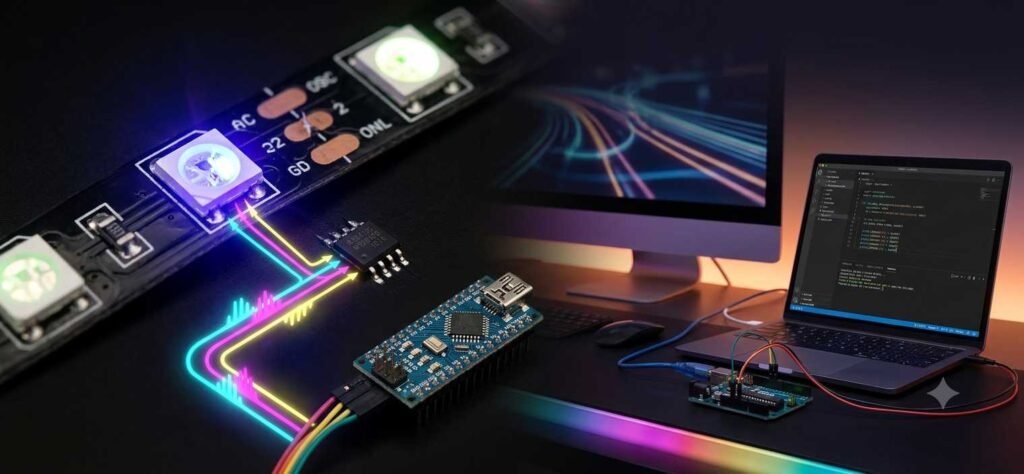
Pixel LED lights are popular for decorative lighting, LED jhalars, signage, events, homes, and commercial displays. Unlike normal LED lights, pixel LEDs can be controlled individually or in groups to create colorful patterns, animations, and lighting effects.
What Is a Pixel LED?
A Pixel LED is an LED lighting unit that contains an LED along with a small control circuit. This allows the lighting controller to tell each pixel what color and brightness it should display.
How Do Pixel LED Lights Work?
Pixel LED lights work by receiving power and digital control signals from a compatible controller. The controller sends information such as the required color, brightness, and lighting effect to the pixels.
For example, in an RGB pixel LED, the controller can adjust the Red, Green, and Blue channels to create different colors. By sending different instructions to multiple pixels, the system can produce running lights, color-changing effects, waves, flashing patterns, and animations.
What Is a Pixel LED Controller?
A Pixel LED Controller acts as the brain of the lighting system. It sends programmed signals to the connected LEDs and controls their colors, timing, brightness, and effects. Controllers are available for different pixel LED protocols, such as WS2811, depending on the type of LED being used.
Why Are Pixel LEDs Popular?
Pixel LEDs offer several advantages:
- Individual pixel control
- Multiple colors and dynamic effects
- Programmable lighting patterns
- Suitable for decorative and commercial applications
- Easy to create attractive animations
- Available in different shapes, sizes, and configurations
Where Are Pixel LED Lights Used?
Pixel LEDs are commonly used for LED jhalar, wedding and event decoration, building decoration, signboards, stage lighting, festive displays, architectural lighting, and creative lighting projects.
Conclusion
Pixel LED lights combine LEDs with digital control technology to create flexible and attractive lighting effects. With the right power supply and compatible controller, they can transform simple lighting into colorful animations and programmable displays, making them a popular choice for both decorative and professional applications.